



About us
Established on 7 September 2023, the Department of Education coordinates and strengthens education efforts in Karenni State following the collapse of the formal education system after the 2021 military coup.
Vision
We aim to build a peaceful and inclusive society through a national education system aligned with a federal democratic framework
Mission
To ensure inclusive access to quality education that nurtures critical thinking, upholds identity, values, culture, and language, and empowers all learners to contribute to a peaceful, just, and federal democratic society.
Our Objectives
- Ensure the right to education and equal access for all
- Implement a federal democratic and inclusive education system
- Promote mother tongue-based multilingual education
Structure of the Department
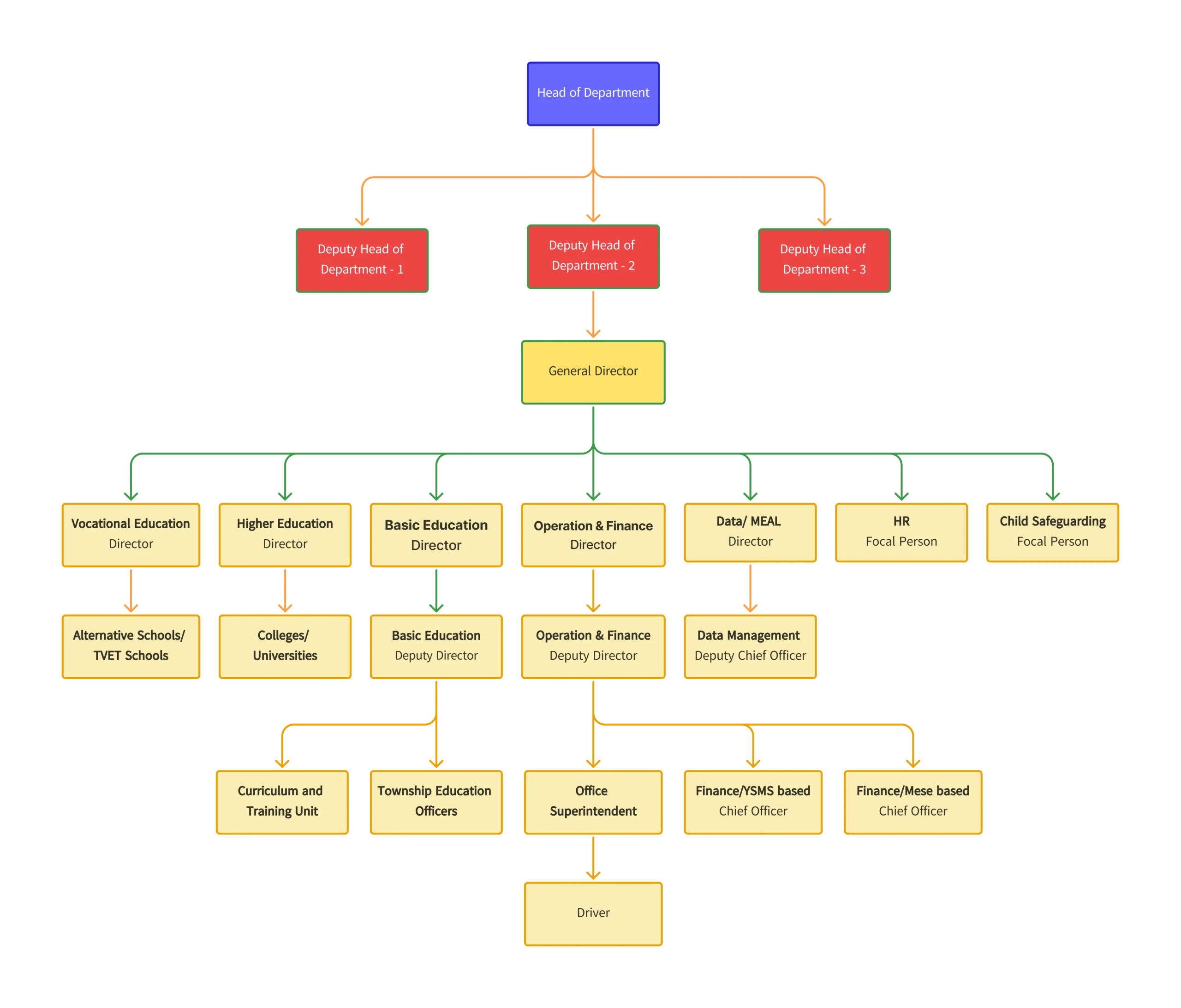
The department is led by a Head of Department and three Deputy Heads representing key education stakeholders. Operations are carried out through four sub-departments:
- Basic Education
- Higher Education
- Vocational Education
- Administration and Finance
Activities of the Department
Basic Education Sub-department
The Basic Education Sub-department is responsible for developing education curriculum frameworks, federal education policy and guidelines, teacher competency framework, supporting teacher stipends, distribution of teaching and learning materials, conducting field assessments and monitoring, implementing teacher education and professional development, supporting education in emergency contexts, improving school infrastructure, registering schools, conducting child safeguarding and protection training, coordinating education stakeholders, and advocacy and networking.
Higher Education Sub-department
The Higher Education Sub-department focuses on expanding access to higher education within Karenni State and abroad. Its activities include coordinating with institutions that offer higher education programs and collaborating with experts and relevant stakeholders to develop higher education policies and pathways.
Vocational Education Sub-department
The technical and vocational education department is working to collaborate with existing alternative schools and training providers. It aims to support the local economy by developing vocational training programs that promote self-reliance and utilize locally available resources.